
The Buyer Is the Beginning: Rethinking the Housing Journey
Critical Conversations: Regal.ia x Imali Series — Designing the Future, Part 1
A Different Kind of Beginning
When we think of housing development, we usually start with land — surveying, zoning, and speculation. But in our September 14 conversation, Ramba Methode and I realized that the real starting point isn’t the land at all.
It’s the buyer.
“If we can start with the buyer,” Ramba said, “then we know the value chain backward. We can design what they need, what they can afford, and how they want to live.”
That idea reframed everything about how Regal.ia’s MVP should function. Instead of treating the buyer as the last link in the chain — someone who only arrives when the building is finished — we began designing a platform that starts with them. The buyer isn’t an afterthought. The buyer is the data source.
Turning Desire into Data
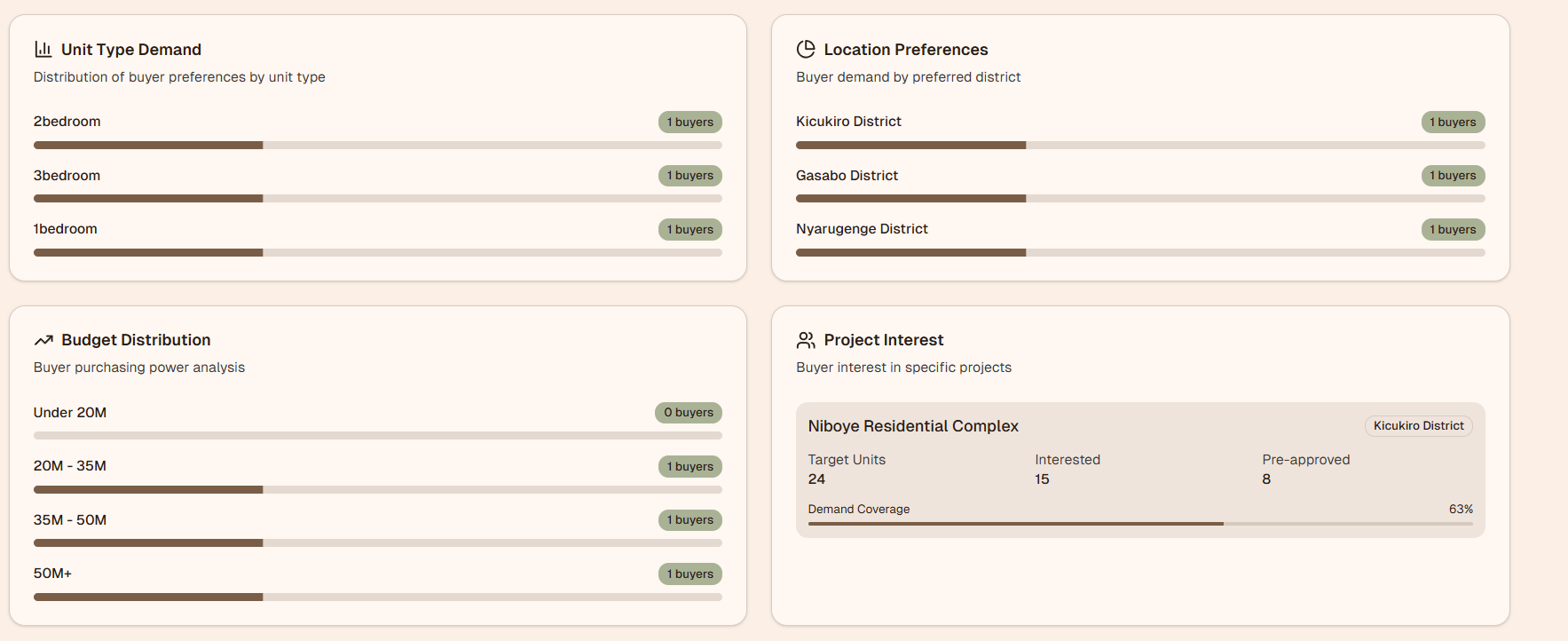
Every home begins with desire — a dream of space, safety, and belonging. What if that desire could become part of the system? Through Regal.ia’s MVP, we’re exploring how to translate buyer intent into usable intelligence. A buyer might not know how to read zoning codes or evaluate structural plans, but they know what they need: proximity to schools, a garden, a workspace, a payment plan that makes sense.
“You can map those needs,” I said. “And when we do, we’re not just capturing data — we’re designing empathy into the model.”
Ramba nodded. “If we can make that data visible,” he said, “it becomes the foundation for trust. Developers can see the demand. Banks can see the market. Everyone wins.”
The MVP’s design logic evolved from that conversation. It isn’t just a marketplace. It’s a feedback ecosystem — a living model that connects buyer intention with developer action and investor confidence.
Rewriting the Housing Timeline
In most markets, the timeline is fixed:
- Developer finds land.
- Investor provides capital.
- Architect designs a product.
- Buyer purchases what’s already built.
But in Regal.ia’s model, we invert that sequence. We begin with aggregated buyer data — what people want, where they want it, and what they can pay. That demand signal shapes which projects advance first. Developers use the MVP to test feasibility. Investors use it to measure risk. By the time construction begins, the housing is already spoken for.
“It’s demand-led development,” Ramba said. “Not supply-led. It’s how we make sure what we build is needed — and affordable.”
This inversion doesn’t just improve efficiency. It democratizes the process. It lets the people who will live in these homes shape what gets built, long before the foundation is poured.
From Buyers to Builders
We talked about how, in Africa’s housing economy, the line between buyer and builder is often thin. Many buyers act as their own developers, building incrementally over years. That’s why so much potential remains locked in half-finished homes, underutilized land, and informal markets.
“These people already understand value creation,” Ramba said. “They just don’t have systems that recognize it.”
That’s exactly what Regal.ia’s MVP aims to change. By organizing buyer data and connecting it to verified suppliers, builders, and financiers, we can help small-scale actors become part of a formal ecosystem — without erasing their autonomy. Instead of imposing top-down solutions, we’re creating a framework of collaboration, where value flows both ways.
Designing with Empathy
One of the most powerful threads in this conversation was the idea that data can carry empathy. As we discussed how the MVP could visualize buyer preferences — family size, energy use, design aesthetics — we realized that this wasn’t just analytics. It was storytelling.
“Every dataset,” I said, “is a narrative about how someone wants to live. We have to treat it with care.”
That’s why Regal.ia’s platform emphasizes ethical data design — transparency, consent, and community benefit. Buyers should know how their data is being used and see how it directly influences development outcomes.
“We’re not collecting for control,” Ramba said. “We’re collecting for connection.”
That sentence became the cornerstone of this phase of the MVP.
Creating Circular Value
The buyer-driven approach also ties directly into Regal.ia’s vision of a circular housing economy — one where materials, capital, and data all feed back into continuous improvement. When buyers signal demand for sustainable features — solar panels, rainwater systems, local materials — those preferences can drive bulk procurement and shared economies of scale. In other words, collective demand becomes leverage.
“If 500 buyers all want solar,” Ramba said, “we negotiate once and everyone saves. That’s circular economics powered by data.”
The MVP will make those insights visible through a shared dashboard, helping investors and developers plan long-term resource strategies while maintaining affordability.
Scaling Inclusion
As the conversation deepened, we returned to the big picture — the 2.5 billion people globally who remain outside formal housing markets.
“They’re invisible because their data is invisible,” I said. “But if we can map their intent, their income, their participation — even informally — they become visible to the system.”
That visibility is transformative. It turns exclusion into inclusion. It opens the door for fractional investment, incremental ownership, and digital identity for real estate participation. This is where Regal.ia’s MVP becomes more than technology — it becomes infrastructure for equity.
“If we get this right,” Ramba said quietly, “we won’t just build homes. We’ll build pathways.”