From Vision to Proof: Building Regal.ia’s MVP in Rwanda
Critical Conversations: Regal.ia x Imali Series
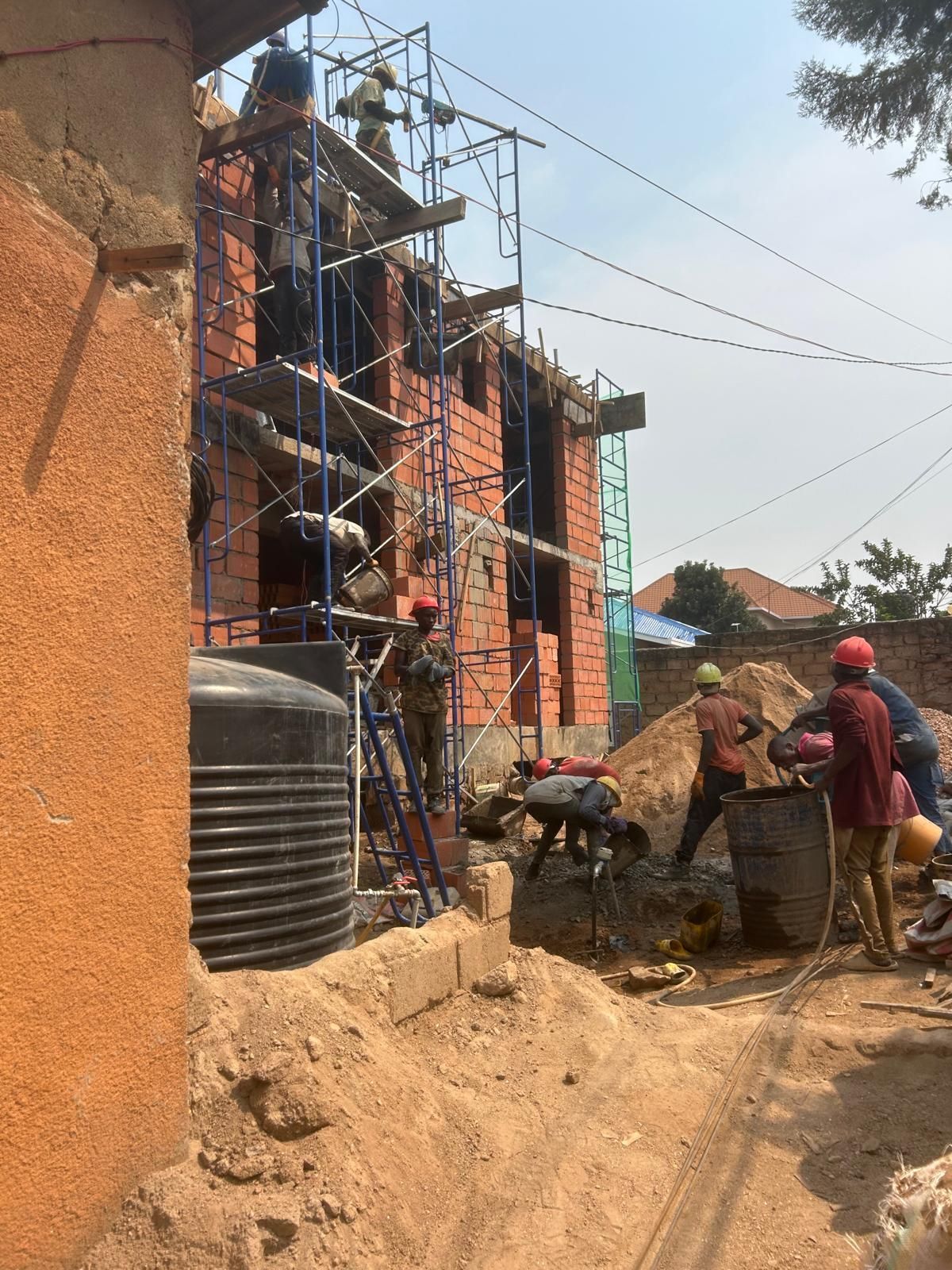
The First Real Test
Every idea reaches a moment when it must leave the page and meet the world. For Regal.ia, that moment came in the summer of 2025, when Ramba Methode and I began defining how our collaboration platform could become a living, working system in Rwanda. The conversation was practical, visionary, and deeply human — a mix of design thinking, financial strategy, and optimism. What began as a technical discussion became a blueprint for how to prove the impossible: that data, trust, and collaboration could be turned into a minimum viable product (MVP) that reimagines real estate for emerging markets.
“Let’s start with one project that feels real,” Ramba said. “We can simulate it, cost it locally, and put it on the market. From there, everything else follows.”
From Document to Demonstration
By this stage, Regal.ia’s MVP already had a clear framework. It would be a real estate collaboration platform that enables developers, investors, city agencies, and landowners to plan, finance, and execute projects through a shared digital system.
The platform would include:
- Stakeholder Dashboards for buyers, sellers, landowners, and investors.
- Scenario Modeling Tools customized for each market.
- Capital Strategies like syndication, tokenization, and local partnerships.
- Smart Contracts for transparent workflows and phase tracking.
But as Ramba pointed out, no amount of elegant code can replace proof.
“We need a real project — something tangible. Even if it starts small, it shows that this system works.”
That was the spark. The MVP would begin not as abstract software, but as a simulation of a real affordable housing project grounded in Rwanda’s master plan.
Designing the Ideal Scenario
To test the platform, we agreed to create a prototype development scenario — a model neighborhood that could evolve from simulation to construction. The idea was to use Regal.ia’s scenario builder to design a small, cost-optimized housing typology, integrating local materials, green infrastructure, and flexible ownership models.
“If you give me a plan,” Ramba said, “I’ll find the land, cost it locally, and take it to the market. You focus on design — I’ll handle the ecosystem.”
It was a powerful division of labor: Regal.ia would lead on digital modeling and system logic, while Imali would lead on-ground validation and market traction.
Reversing the Usual Order
Traditionally, architects start with land and tailor designs to it. But in this project, we reversed the logic — starting instead with the ideal plan, then finding suitable land.
At first, it felt counterintuitive. But Ramba’s reasoning was sound:
“We don’t have endless resources. Let’s use the plan as a marketing tool — something people can see, buy into, and believe in.”
By creating a catalog of optimized, build-ready typologies — modular, adaptable, and sustainable — Regal.ia could showcase what’s possible before the first foundation is laid. It was an inversion that made perfect sense for a market driven by trust and demonstration.
A Kit of Parts for Sustainable Living
The MVP would include a “kit of parts” — a modular design framework that allowed for customization while maintaining consistency. Each version could adapt to site conditions, materials, and budgets.
This kit would model multiple layers:
- Design and Construction: local materials, solar integration, ventilation.
- Cost Efficiency: pricing models based on market seasonality.
- Partnerships: stakeholder agreements and local supply chains.
- Return on Investment: projected revenue, maintenance, and workforce impact.
“We can show people what they’re winning,” Ramba said. “When they collaborate, they save — that’s where the success will come from.”
The Regal.ia system would even model seasonal cost dynamics — for example, how material prices shift between Rwanda’s dry and rainy seasons. This level of precision would make it not just a tool for design, but for economic planning.
Beyond the Build: Designing for Longevity
While Ramba focused on the build phase, my mind was already on the lifecycle:
“How do we maintain it? How do we grow the local workforce? What happens after it’s built?”
Those questions led to an expanded framework — one that sees development not as a one-time event, but as an ecosystem of continuous growth. Ramba proposed integrating workforce development and local maintenance systems into the MVP’s future roadmap. The idea was that even after construction, data could keep generating value — connecting maintenance crews, suppliers, and local tech hubs into an ongoing feedback loop.
“Maybe design it so that maintenance can be done locally,” he suggested. “It keeps costs low and jobs consistent.”
That’s the future Regal.ia envisions: a development platform that doesn’t end with a ribbon-cutting — it keeps building human and economic capacity long after.
The “Airbnb of Construction”
By the end of the conversation, our shared vision crystallized around a phrase that still makes us smile: “The Airbnb of Construction.” Just as Airbnb connects travelers with hosts through trust-based systems, Regal.ia would connect landowners, investors, suppliers, and developers — each with verifiable data and transparent reviews.
“If a supplier delivers the wrong material,” Ramba joked, “they get one star. If everything goes right, they get ten.”
It’s a simple metaphor for a complex system — one where data replaces paperwork, and trust becomes measurable.
Proving the Concept
The MVP’s goal is no longer abstract. It’s concrete — a proof of concept grounded in a real development project. Ramba’s plan is to identify a site aligned with Rwanda’s master plan and run the full Regal.ia workflow — from digital modeling to market simulation.
“Even if it’s small,” he said, “it shows the ecosystem works. That’s how we attract partners, and that’s how we build momentum.”
For both of us, the next step is the same: execute something real — something that shows that the bridge between design and development is no longer theory.