
Africa Week 2025: The New Investment Architecture
Debt, Digital Infrastructure, and Partnership-Based Finance
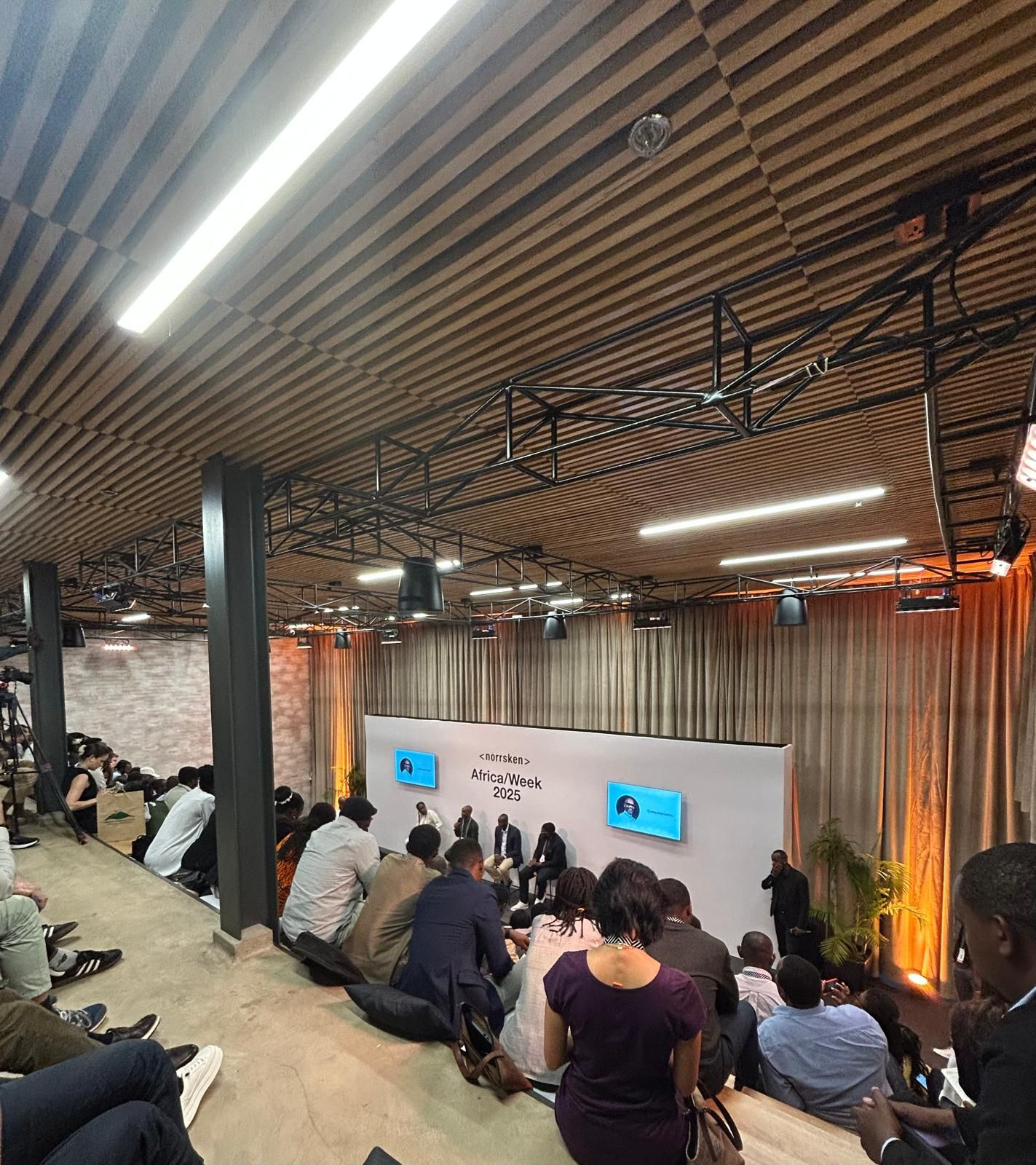
Africa Week 2025 revealed something that rarely crystallizes so clearly: across debt markets, fintech resilience stories, angel investing, and startup support structures, the continent is converging toward a new investment architecture built on four shared principles:
- Impact-aligned debt is foundational to inclusive growth
- Digital infrastructure is becoming the new collateral
- Strategic partnerships are the primary mechanism for de-risking
- Credibility, governance, and multi-market readiness determine investability
This synthesis highlights the 10 most important insights for investors, DFIs, and ecosystem leaders — and the role Mecca Development, Regal.ia, and Critical Conversations play in making this new architecture real.
1. Impact-Aligned Debt Is the Engine of SME, Youth, and Women-Led Growth
Africa Week opened with a clear message from Ecobank and Access to Finance Rwanda that Banks cannot separate their success from the growth of SMEs, women entrepreneurs, and youth. Yet, these groups are forced into lending models that were never designed for them:
- collateral-first underwriting
- three-year track record requirements
- rigid repayment schedules
- thin margins and high interest rates
- inaccurate risk perceptions (women especially)
The problem is not entrepreneur quality — it’s structural mismatch.
The opportunity:
Impact-aligned debt — supported by guarantees, blended finance, and alternative data — opens markets that traditional tools cannot reach.
Mecca Development actively designs these de-risking structures with ecosystem partners.
2. Data Is Now More Important Than Capital Itself
From Lendable’s debt-investor perspective, the most important insight was blunt: “The constraint is not information. It's usable information.”
Most lenders and fintechs have data — but it is:
- unstructured
- incomplete
- non-standard
- not investor-grade
This is the single biggest barrier to credit expansion across Africa.
The opportunity:
Digital infrastructure platforms like Regal.ia transform raw behavioral activity into standardized, transparent, credit-ready data.
Regal.ia effectively becomes a data collateral layer for the ecosystem.
3. Private Debt Requires Predictability — and Predictability Requires Infrastructure
Lendable emphasized that debt flows only after three things exist:
- predictable revenue behavior
- consistent data trails
- governance discipline
The opportunity:
Regal.ia shortens the distance between early-stage innovator and debt-ready enterprise by embedding:
- automated reporting
- behavioral scoring
- real-time transaction visibility
- integrated governance rails
- FX-risk monitoring
Regal.ia is the infrastructure debt investors have been waiting for.
4. Volatility Is Not an External Risk — It Is the Operating Environment
Bamboo’s journey showed how a fintech survives five consecutive crises:
- currency devaluations (360 → 1,700)
- bear markets
- regulatory shutdowns
- SEC freeze
- CBN account blockage
The lesson was surprising: volatility did not kill user engagement — it accelerated it.
The opportunity:
Platforms win not by avoiding volatility but by designing around it:
- multi-currency systems
- multi-market reach
- diversified products
- regulatory readiness
- user education
This mirrors Regal.ia’s architecture: infrastructure built for resilience, not stability.
5. Regulatory Engagement Is Not Optional — It’s a Competitive Advantage
Bamboo’s regulatory crisis was severe: The platform was declared illegal overnight and had accounts frozen. Their response? Co-creating the Digital Broker License with regulators. This pattern is becoming increasingly important across Africa.
The opportunity:
Regulators prefer platforms that are:
- transparent
- data-rich
- compliant by design
- partnership-oriented
Regal.ia builds the reporting infrastructure regulators want, lowering systemic risk and increasing investor confidence.
6. Strategic Partnerships Are the Primary De-Risking Mechanism in African Finance
Across all sessions — debt, angels, fintech, private credit — partnerships emerged as the strongest predictor of success.
- From the Angel Panel: Partnerships help founders see what they can’t see — business models, revenue streams, or alternate market pathways.
- From Kabisa Electric: A four-way partnership (bank + insurance + EV company + taxi drivers) unlocked debt where traditional underwriting failed.
- From Bamboo: Partnerships with regulators, communities, and product providers stabilized the business.
The opportunity:
Mecca Development specializes in multi-stakeholder alignment — the most reliable de-risking tool in African markets.
Regal.ia extends this by providing a shared digital infrastructure layer that connects these partnerships.
7. Founders Need Credibility More Than Capital
The angel panel made this clear: “Investors need to know you in a very short time — credibility makes that possible.”
Credibility comes from:
- clean data
- professional reporting
- market traction
- coachability
- transparency
- network activation
The opportunity:
Critical Conversations helps founders understand investor expectations, Mecca Development strengthens investment readiness, and Regal.ia operationalizes credibility through data.
8. Multi-Market Expansion Is Not Optional — It’s a Signal of Investability
Across sessions:
A company fully dependent on one small market is less attractive to investors.
- Angels stressed cross-market readiness as a de-risking tool
- Bamboo expanded to Ghana and South Africa as a hedge
- Lendable analyzes multi-country viability
- Banks seek scalable SME segments
The opportunity:
Regal.ia’s architecture is intentionally multi-market, giving investors geographic resilience.
9. De-Risking Must Happen Before Capital Arrives
Across Africa Week, the message was consistent:
- angels create founder discipline
- platforms like Regal.ia provide standardized data
- Mecca Development builds ecosystem alignment
- blended finance structures de-risk entire market segments
The opportunity:
The next decade belongs to organizations that reduce risk at the infrastructure level, not just the deal level.
10. Africa’s Investment Future Is Partnership Infrastructure
Taking all sessions together, Africa’s new investment architecture looks like this:
- A. Digital infrastructure (Regal.ia)
- Creates predictability, transparency, and governance.
- B. Ecosystem design (Mecca Development)
- Aligns public–private incentives and builds financing pathways.
- C. Mindset-shifting convenings (Critical Conversations)
- Surface barriers, educate leaders, and move the narrative from risk to opportunity.
- D. Shared-risk lending models
- Guarantees, blended finance, multi-party underwriting.
- E. Cross-market product and regulatory resilience
- Fintechs scaling responsibly in varied environments.
This is the architecture investors must understand — not a scatter of individual companies, but a coordinated system. The Conclusion — Africa Is Not High Risk; It Is High Complexity. And complexity becomes investable when the right infrastructure, partners, and insights are in place.
Africa Week showed us that:
- SMEs are creditworthy when the system is designed for them
- women outperform repayment stereotypes
- startups scale when data replaces collateral
- fintechs thrive when their infrastructure is resilient
- angels de-risk founders through credibility and networks
- lenders need digital infrastructure more than anything else
- and investors need ecosystem partners, not isolated bets
Mecca Development, Regal.ia, and Critical Conversations sit at three essential layers of this architecture — forming the connective tissue that turns complexity into clarity and risk into investability. Africa’s new investment era isn’t coming. It’s already here.