
Building Systems, Not Just Structures: From Land to Data to Design
Critical Conversations: Regal.ia x Imali Series — Designing the Future, Part 2
Systems Thinking in the Housing Economy
In most development conversations, the focus is the building — square meters, costs, materials. But when Ramba and I spoke that September afternoon, our conversation zoomed out. We weren’t talking about walls. We were talking about systems — the invisible networks that shape how buildings come to exist in the first place.
“We keep trying to fix housing one project at a time,” Ramba said. “But the problem isn’t the project. The problem is the system that produces it.”
That line became the core of this discussion. Regal.ia’s MVP isn’t designed to manage a single transaction; it’s designed to rewire how development happens — linking land, people, data, and resources into a continuous, intelligent loop.
The Data Layer: From Ground Truth to Cloud Intelligence
Our shared challenge was translating something deeply physical — land — into something digital and interoperable.
“Every plot already tells a story,” I said. “It knows its boundaries, its slope, its soil. But those stories live in silos — with surveyors, with agencies, with banks. We need to connect them.”
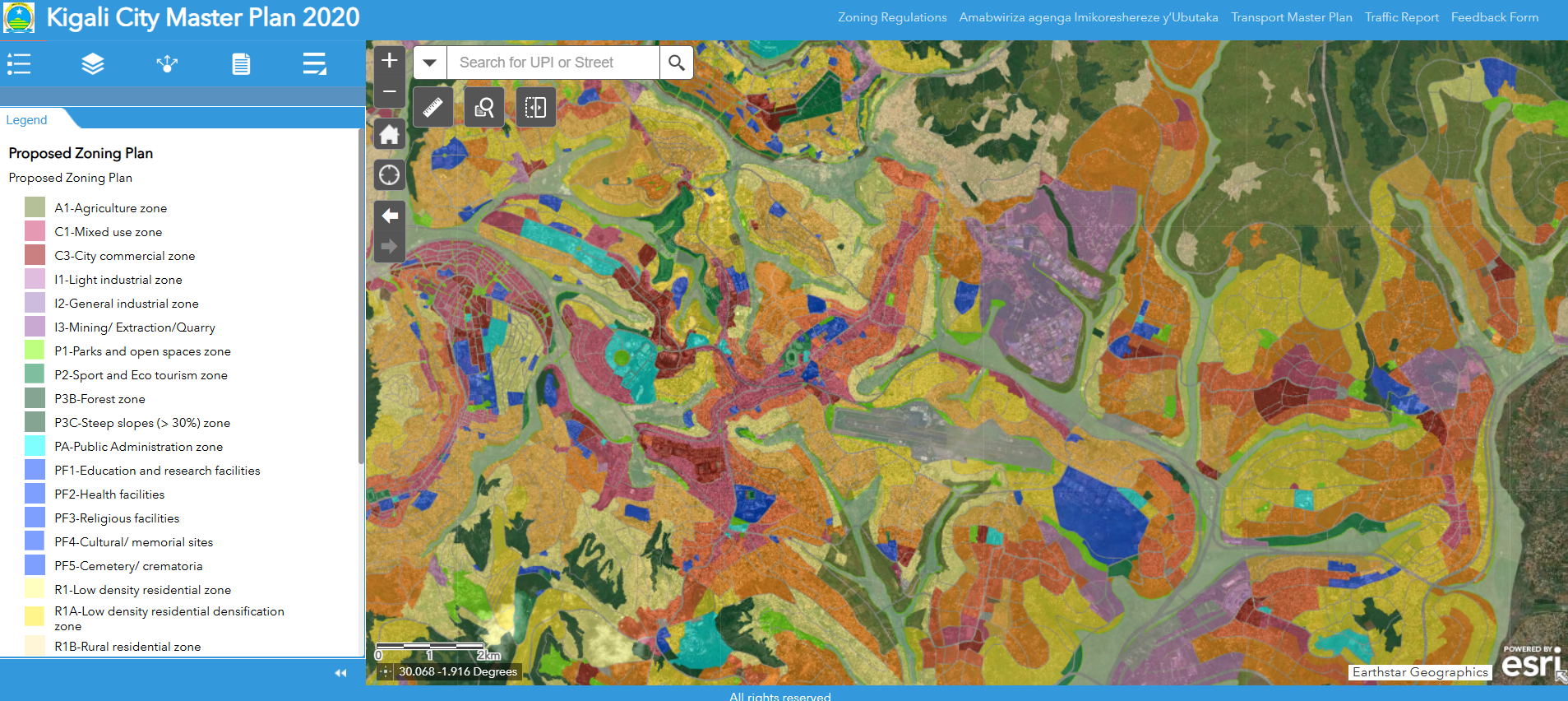
Rwanda already has one of the most advanced land data systems in Africa through its Unique Parcel Identifier (UPI) framework. But the problem, as Ramba pointed out, is not data availability — it’s fragmentation.
“The data is there,” he said. “It’s just not being used to make decisions.”
So the MVP’s data layer will bridge what exists — zoning, climate, ownership — with what’s missing: market demand, supplier capacity, and investor intent. This isn’t about building a new database. It’s about creating an interface between existing ones — a layer of interoperability that allows decision-makers to see connections previously hidden in plain sight.
The Land Layer: Visibility and Value
Ramba explained how visibility itself can create value. In Rwanda, many landowners hold idle plots because they don’t have the capital to build — or access to buyers and developers.
“The land is there, but it’s not visible in the market,” he said. “When we make it visible, we make it valuable.”
Through Regal.ia’s MVP, landowners can register and verify their parcels, connecting them with potential collaborators. This visibility turns static property into an active asset. The MVP allows developers to view parcels not just by location, but by feasibility — which sites are build-ready, which align with zoning, which can be combined for multi-parcel developments. By mapping land in layers of value — social, financial, ecological — the system transforms geography into intelligence.
The Design Layer: From Blueprints to Scenarios
As we mapped the next steps for the MVP, we talked about the need for a design engine that isn’t just aesthetic, but analytical.
“Developers waste time redesigning what could be standardized,” I said. “If we can systematize the logic — local materials, building codes, costs — we can generate design options automatically.”
Ramba immediately saw the potential for real impact:
“That would save so much time,” he said. “Right now, we spend months just figuring out what’s possible. If the system can do that in minutes, we can build faster — and smarter.”
This feature became the foundation for Regal.ia’s Scenario Builder — a tool that allows users to simulate housing typologies based on data inputs like land size, slope, budget, and environmental constraints.
It’s not just about visualizing buildings; it’s about generating scenarios for equity and efficiency.
The Human Layer: Connecting the Ecosystem
Even the most advanced system can fail without human infrastructure. That’s why the MVP is designed around stakeholder integration — bringing together landowners, developers, builders, and investors in one verified environment.
“Everyone needs to see their own benefit,” Ramba said. “When the plumber, the investor, and the architect all know their place in the system — that’s when things move.”
That sense of alignment is crucial. The MVP doesn’t replace human expertise; it amplifies it. It turns informal relationships into traceable, trustable workflows — creating an ecosystem of accountability that rewards contribution over speculation.
“We’re not just digitalizing the process,” I added. “We’re humanizing it — giving every participant visibility, recognition, and agency.”
The Material Layer: Building the Circular Economy
As our talk shifted to sustainability, Ramba described the local construction economy not as a supply chain, but as a circle of opportunity.
“We have local materials, we have workers, we have buyers — but they’re disconnected,” he said. “If we connect them, the money stays in the economy.”
This principle — keeping value local — is embedded in the MVP’s logic. The platform can track not just costs and timelines, but material origins and circular flows. For instance, if a developer chooses a local brick supplier, the system can quantify its economic and carbon benefits. Over time, that data helps shape policies, partnerships, and even pricing strategies for sustainable construction.
“The platform itself becomes a market,” I said. “Not just for real estate, but for accountability.”
From System Design to System Change
As the conversation wound down, Ramba summed up the vision with clarity that still echoes:
“We don’t just want to build houses. We want to build a system that builds houses — a system that can keep running even when we’re not there.”
That’s the ultimate test of good design: longevity. The MVP is more than software; it’s an institutional framework in digital form — one that can outlast its founders by encoding their principles into its structure. It’s a living system for continuous collaboration, capable of scaling across borders while remaining grounded in local realities.