
From Fragmentation to Connection: Regal.ia’s Vision for Africa’s Housing Future
This is a subtitle for your new post
The Challenge of Fragmentation
In Kigali, the skyline tells a story of transition. Tower cranes rise above the city’s green hills, signaling growth — but beneath that progress lies a challenge familiar to many African cities: fragmentation.
Markets are full of opportunity yet disconnected. Land is available but underutilized. Developers are ready to build but lack affordable financing. And investors abroad want in — but can’t navigate the complexity on the ground. During my first month in Rwanda, this fragmentation became more than a concept; it was something I could feel. The systems, the data, the materials — they all existed, but not in harmony. That’s when my ongoing conversation with Ramba Methode, founder of Imali, crystallized into a shared mission: to build connection where fragmentation reigns.
“Rwanda has everything,” Ramba told me. “But it’s disorganized. The data is there — it’s just stuck.”
The Opportunity in Data Layers
At the heart of Rwanda’s real estate system lies a powerful tool: the Unique Parcel Identifier (UPI). Every plot of land in the country has one — containing ownership details, zoning, and land size. It’s a digital foundation most countries would envy. But as Ramba put it, “the information is there, but it’s not being used to its full potential.”
That’s where Regal.ia comes in. We see data not as an archive, but as infrastructure. By integrating geographic information systems (GIS) with existing land data, climate analytics, and socioeconomic patterns, Regal.ia adds what we call an intelligence layer — a way to see not just where to build, but how and for whom. When these layers align, they can reveal opportunities hidden beneath the surface: flood-prone areas that could host climate-resilient housing, or neighborhoods where local materials could cut costs while generating jobs.
“We’re not just mapping land,” I told Ramba. “We’re mapping possibility.”
Building a Matchmaking Layer
Ramba’s concept of a “matchmaking layer” perfectly complements Regal.ia’s approach. He imagines a platform where landowners, investors, and developers can finally find each other — powered by verified data.
In Rwanda, for example, thousands of small landowners hold property that sits idle because they can’t afford to build. Meanwhile, global investors visit every week, eager to develop, but find the landscape too complex to navigate. The result? Missed opportunities and stalled projects. Through Regal.ia’s platform, feasibility data from each UPI — size, zoning, valuation, access to infrastructure — can be combined with investor criteria, environmental conditions, and community goals. The system can then generate project typologies and financial models in real time, effectively matching needs with resources. It’s an elegant fix for a chronic problem. Instead of working in isolation, stakeholders can see their collective value — and act together.
“The more connected we are,” Ramba said, “the faster we can build. We need systems that let people do what they do best — and then link them.”
The Circular Economy of People
Too often, circular economy models talk only about materials. But in Rwanda — and in much of the Global South — the real circular economy starts with people.
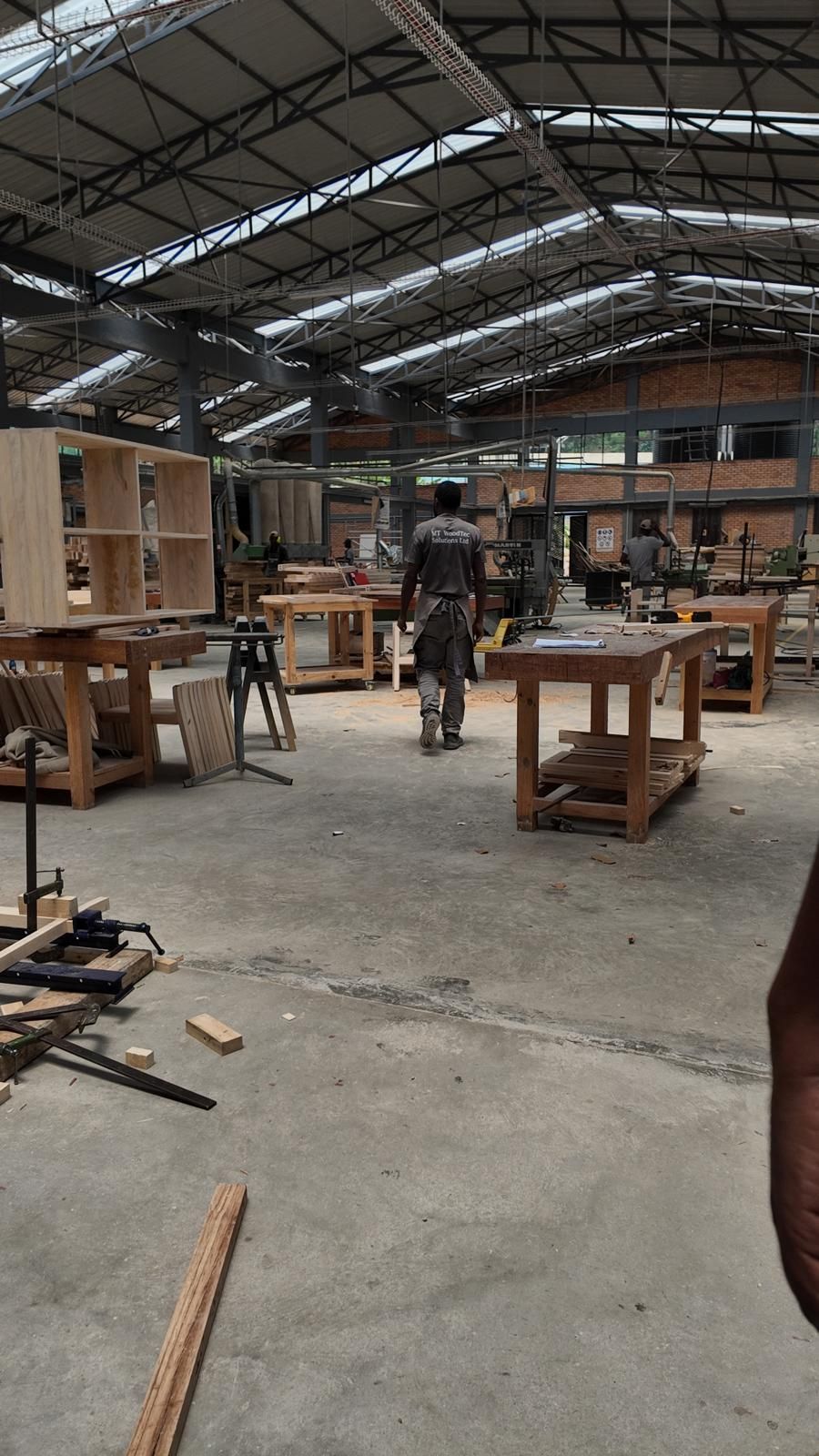
Young workers, craftspeople, and local suppliers want to contribute to growth but are locked out of steady opportunities because of fragmented markets. Regal.ia’s framework connects them through transparent value chains: local materials feed into design systems; local labor supports modular construction; and data ensures efficiency. This isn’t just a technical exercise — it’s an ethical one. Equity isn’t an outcome at the end of the project; it’s a design principle built in from the start.
“Circular economy is about people,” Ramba reminded me. “We have the youth. We have the energy. What we need is connection.”
A Blueprint for Scalable Systems
The Rwanda pilot is our living laboratory. It’s where we’re testing how data aggregation, stakeholder matchmaking, and spatial design can function as parts of a single system.
Regal.ia’s goal isn’t to replace human expertise — it’s to amplify it. The platform becomes a shared language between government agencies, architects, developers, and investors. It lets everyone see the same map — one that visualizes land value, risk, and opportunity in one place. From a broader perspective, this pilot is about creating standards for scalable housing systems — ones that can adapt from Kigali to Lagos, from Nairobi to Accra. The model could support both affordable housing and large-scale private investment, balancing profit with inclusion.
“We’re not building projects,” I told Ramba during our last session. “We’re building systems that build projects.”