Designing Trust: How Regal.ia and Imali Aligned Across Continents
Critical Conversations: Regal.ia x Imali Series
Beyond the Contract
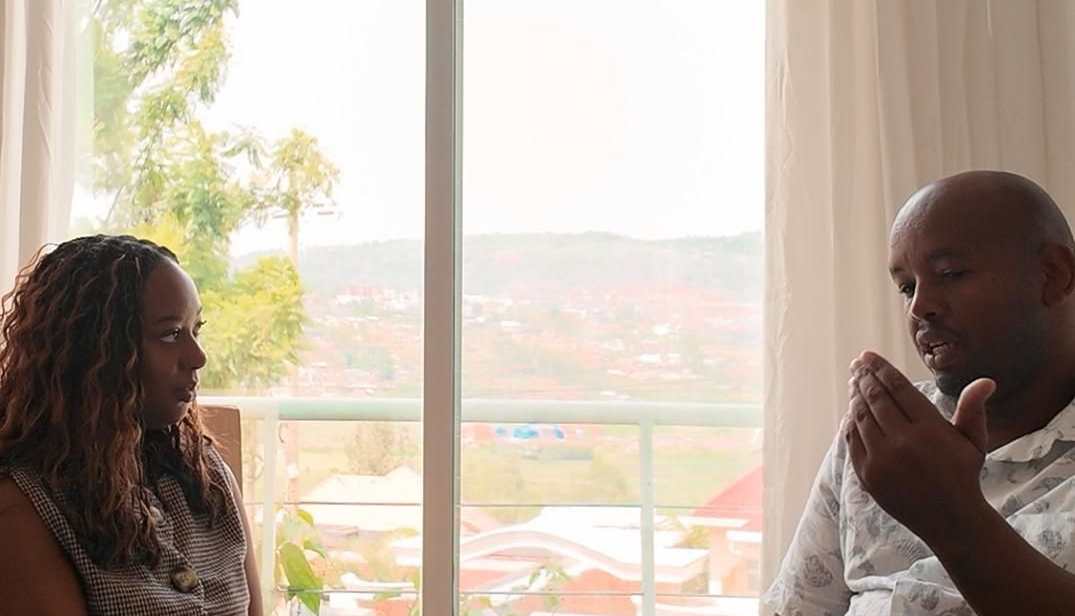
Every partnership begins with a document — but the real foundation is trust. When I spoke with Ramba Methode, founder of Imali, in early August 2025, we were finalizing the first stages of the Regal.ia MVP for Rwanda. The paperwork was nearly done, but what mattered most wasn’t the signatures — it was the shared belief in what we were building.
“For me, a contract is just a paper,” Ramba said. “If you sign a thousand pages and you’re not committed, you’re not committed.”
That sentiment set the tone for our collaboration. What we were building together — across time zones, languages, and market systems — depended not just on data or design, but on a deep trust in process and people.
The Ideal Scenario
The conversation began with logistics — updates to our roadmap, wireframes, and project timelines. But as we talked, it became clear that what we were really doing was designing a relationship between two systems: the global digital design economy and Rwanda’s emerging housing ecosystem. My goal was to clarify what the MVP needed to do and who it needed to serve.
- For Regal.ia, the priority was
connection — bridging fragmented markets through data.
- For Imali, it was
credibility — using local trust networks to turn land into opportunity.
“If we can gather people who have land and show they’re committed,” Ramba explained, “then data becomes our capital. Even before the money moves.”
That insight reshaped how I thought about the MVP. It wasn’t just a digital product. It was a proof of concept for collaboration.
Designing for Different Stakeholders
As we refined the MVP logic, we realized we were designing for multiple languages of trust. I explained that the U.S. version of Regal.ia was built for developers, planners, and investors — people fluent in policy, finance, and tech. But in Rwanda, Ramba reminded me, the market speaks differently.
“If I’m a buyer,” he said, “I don’t need to know how the cement is made or how the financing works. Each user should have their own entry point — their own message.”
Together, we mapped four user types for the MVP:
- Landowners — contributing plots or assets.
- Investors — providing liquidity or fractional capital.
- Builders and suppliers — offering labor, materials, and expertise.
- Buyers — end-users or tenants seeking affordable housing.
On the backend, Regal.ia would unify these experiences through data. But on the frontend, each user would see what mattered most to them — their own version of the same reality. That dual-layered design became one of the MVP’s defining principles: tailored access, shared infrastructure.
Financing Without Friction
Much of our discussion circled back to one core challenge — how to fund development without heavy cash dependence. In many markets, high-interest rates and limited liquidity make real estate inaccessible to smaller players. Ramba believed the answer wasn’t just financial innovation — it was behavioral design.
“Cash can be a distraction,” he said. “People pretend to have it and take our attention away from the real work. The focus should be on organizing land, materials, and people.”
He described a system where smart contracts allow contributors — from lawyers drafting agreements to engineers designing plans — to be compensated over time, even years later, once projects are completed. It’s a radical idea, but one grounded in real economics: pay based on outcomes, not promises.
“You could have a good lawyer design a smart contract today,” Ramba said, “and get paid when the first keys are delivered. That’s value creation without cash flow.”
In this model, knowledge becomes currency, and trust becomes infrastructure.
Leveraging Local Advantage
We also talked about what makes this partnership powerful: balance. Rwanda offers cost efficiency, local insight, and flexibility. Regal.ia brings digital infrastructure, systems thinking, and an equity-driven framework. Together, those advantages create a shared competitive edge.
“The cost of living here is different,” Ramba said. “If we use local advantages and combine them with your tools, that’s how we succeed.”
Our goal was to design a development system that reflects that duality — global standards, local intelligence.
Mapping the Ecosystem
Toward the end of the conversation, we began listing what needed to be built next:
- The MVP’s logic framework.
- Data collection strategies for Rwanda’s
2050 Kigali Master Plan.
- Stakeholder mapping for developers, investors, and city agencies.
- A shared Google document to visualize the “ideal scenario” — the best-case future we were designing toward.
For Ramba, this next phase was about translating vision into structure.
“We map the country, we map the land, we make the agreements,” he said. “Then we go to the big players with proof.”
For me, it was about systemizing that proof — turning data into action, and action into insight.
A Partnership Built on Process
By the end of the call, we agreed to formalize the MVP roadmap collaboratively — through writing, iteration, and transparency. That became our rhythm: conversation → documentation → design.
“The real value of this tool,” I told him, “is that it helps people see how to work together — not just what to build.”
Regal.ia’s Rwanda MVP is, in essence, a tool for shared reasoning. It helps people in different markets, roles, and realities align around a single goal: making development equitable, efficient, and human-centered. What started as a technical meeting became a manifesto for collaboration — a reminder that innovation isn’t just about building faster. It’s about building together.