
Centering Black Excellence
What Madison’s New Cultural Landmark Teaches Us About Design, Identity, and Investment
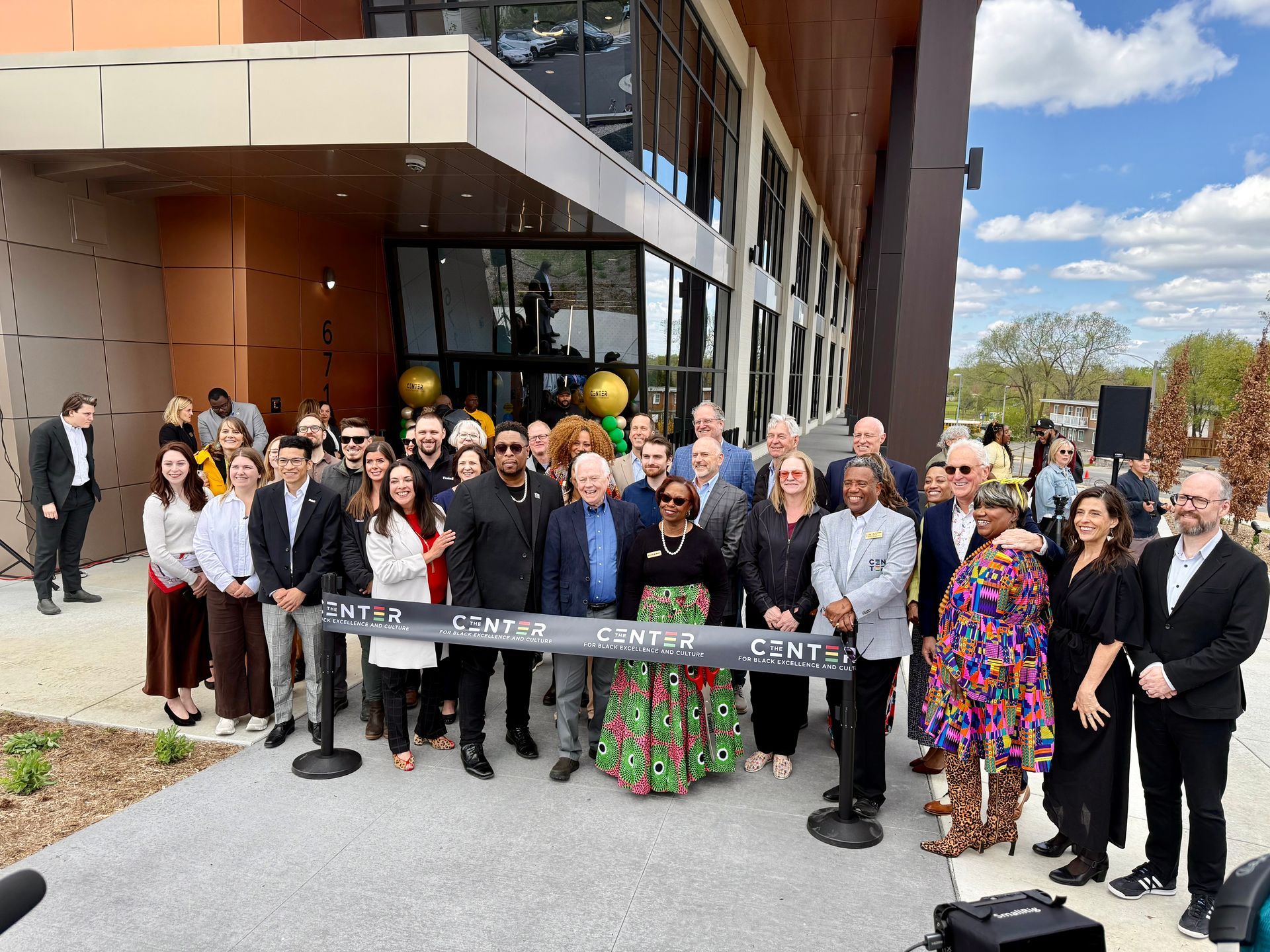
Some buildings serve a function. Others speak.
The Center for Black Excellence and Culture in Madison, Wisconsin does both. It welcomes, teaches, gathers, affirms, and challenges. From the moment you arrive, the building makes clear that Black culture is not an afterthought or a decorative layer added at the end of a project. It is the foundation, the organizing principle, and the story the building was created to tell.
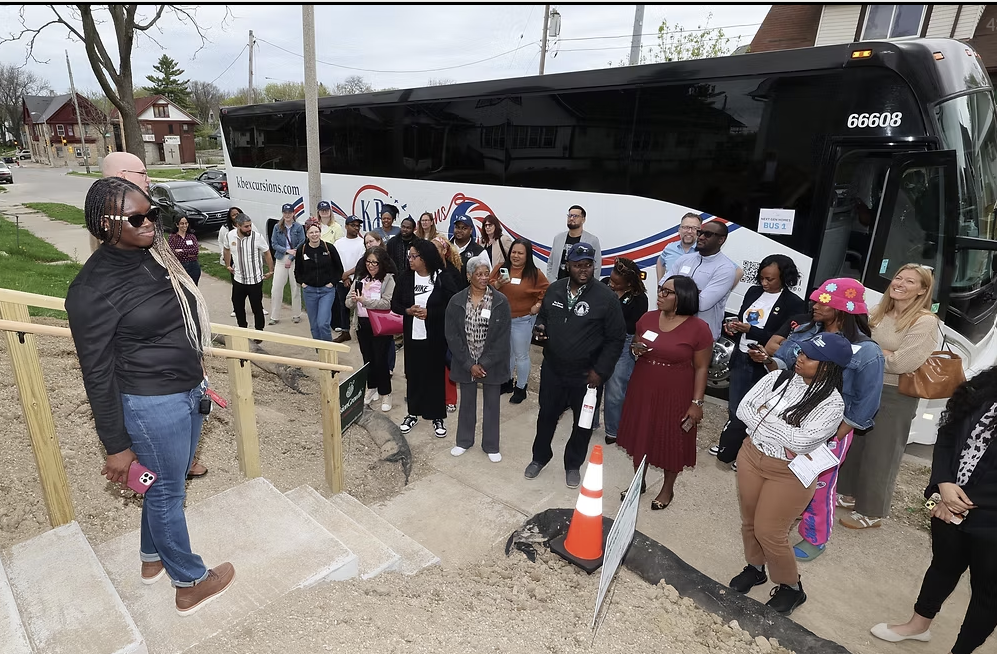
I traveled from Milwaukee to Madison to attend a private tour of the Center hosted through a collaboration between Wisco NOMA and AIA Wisconsin. The evening brought together architects, designers, contractors, engineers, planners, and community stakeholders to experience one of Wisconsin’s most meaningful new cultural spaces. As a past board member of Wisco NOMA and the current Treasurer for NOMA National, I arrived with both professional curiosity and personal pride.
The tour was led by Rafeeq Asad, Vice President and Director of Team Development at JLA Architects and past president of the Wisconsin Chapter of the National Organization of Minority Architects, alongside members of the broader project team, including Justin Plautz and Denzel B. of Findorff, Christopher Sina, PLA, ASLA of Saiki Design, and Amy Landis, PE of GRAEF. Together, they offered a behind-the-scenes look at how architecture, engineering, construction, landscape design, and cultural storytelling shaped the Center.
What emerged was not simply a tour of a building. It was a study in intentionality.
A Building Rooted in Cultural Identity
The Center for Black Excellence and Culture is bold about who it serves.
Its visual language reflects the Black diaspora through color, geometry, rhythm, texture, openness, art, and movement. The building does not whisper its purpose. It celebrates it. It makes space for history, creativity, entrepreneurship, gathering, production, and future-building.
The experience begins through gallery and corridor spaces filled with artists, cultural references, and historical markers. From there, the tour moved into a fully equipped podcast studio, where Findorff’s team described the acoustic strategies used to support high-quality sound and media production. That detail stood out. A podcast studio inside a cultural center is not just a room with equipment; it is an investment in voice, narrative, and ownership.
Moving through the Center, we entered the atrium lobby — a circular gathering space that overlooks the lower-level bar and reception area. The space is framed by masks, stained glass, layered views, and clearstory glass that carries light across multiple levels. The building feels both grounded and expansive, intimate and civic.
Everything about the Center exudes community collaboration and design excellence.
Preserving Intentionality Through Design
One of the most powerful reflections from the tour came from Rafeeq Asad, who spoke directly to the challenge and responsibility of designing a space so deeply connected to culture, identity, and community.
When asked about the most challenging and rewarding aspects of the project, Rafeeq shared:
“Aside from the site's constraints and dramatic topographical changes, the most challenging aspect of designing the Center was preserving the intentionality behind every decision. Every reveal, every transition, every material selection, and every architectural gesture was carefully considered and imbued with purpose. Maintaining that level of design integrity—and helping others fully embrace and understand it—proved challenging at times. As the project evolved, however, the entire team came to understand the essence of the Black aesthetic and the significance behind the many design elements that shape the experience of the building.
The most rewarding aspect of this project is that it is the first in my career to be born directly from a community of which I am a part—a project where the client looked like me, shared a cultural understanding, and entrusted me with helping bring his vision to life. That trust is sacred. That responsibility is deeply personal.
I am excited for people across the state to experience the Black aesthetic expressed throughout this Center—the bold use of color, the angular forms, the openness, the rhythm, the patterns, and the richness of texture. Every element has been thoughtfully woven together to tell a story. This is more than a building; it is an expression of culture, identity, and excellence. The space speaks. It celebrates. It affirms.”
That quote captures what makes this project significant.
The Center is not successful because it uses cultural references. It is successful because those references were treated as design intelligence. The Black aesthetic was not applied superficially. It shaped the experience of the building through spatial hierarchy, circulation, material transitions, light, texture, sound, and scale.
That level of intentionality requires more than talent. It requires trust, coordination, and a shared commitment to protect the vision through every phase of design and construction.
Detail Scale, Building Scale, Community Scale
As someone working at the intersection of design, planning, and development, I kept returning to three takeaways from the tour: texture, transition, and multi-purpose design.
At the detail scale, the Center is full of carefully considered moments. Every reveal, ceiling condition, material shift, custom furniture piece, and angular form contributes to the larger story. Nothing feels accidental.
At the building scale, the project demonstrates the complexity of translating an ambitious cultural vision into built form. The team had to respond to dramatic topographical changes, site constraints, construction coordination, material performance, systems integration, and architectural features that required precision and collaboration.
At the community scale, the Center becomes something larger than architecture. It is infrastructure for cultural preservation, entrepreneurship, storytelling, talent attraction, and community connection. It creates a place where Black identity is not only represented, but centered.
That is why this project should be studied.
It shows what becomes possible when investment, intentionality, and the right team come together.
Collaboration as a Design Strategy
The Center also makes clear that transformational projects are never delivered alone.
JLA Architects provided the design leadership through Rafeeq Asad’s vision and stewardship. Findorff helped translate that vision into construction reality, walking tour attendees through the nuances of lighting, ceiling conditions, acoustic strategies, and construction coordination. Saiki Design contributed landscape expertise, including strategies for responding to the challenging topography and shaping outdoor spaces. GRAEF supported the engineering systems that help the building perform.
The outdoor deck was one of the most memorable moments of the tour. Sunlight filtered through wood openings, creating a balance of shade, warmth, and movement while emphasizing the angular features that define the project. It was a beautiful example of how the Center works across scales: technical, sensory, cultural, and communal.
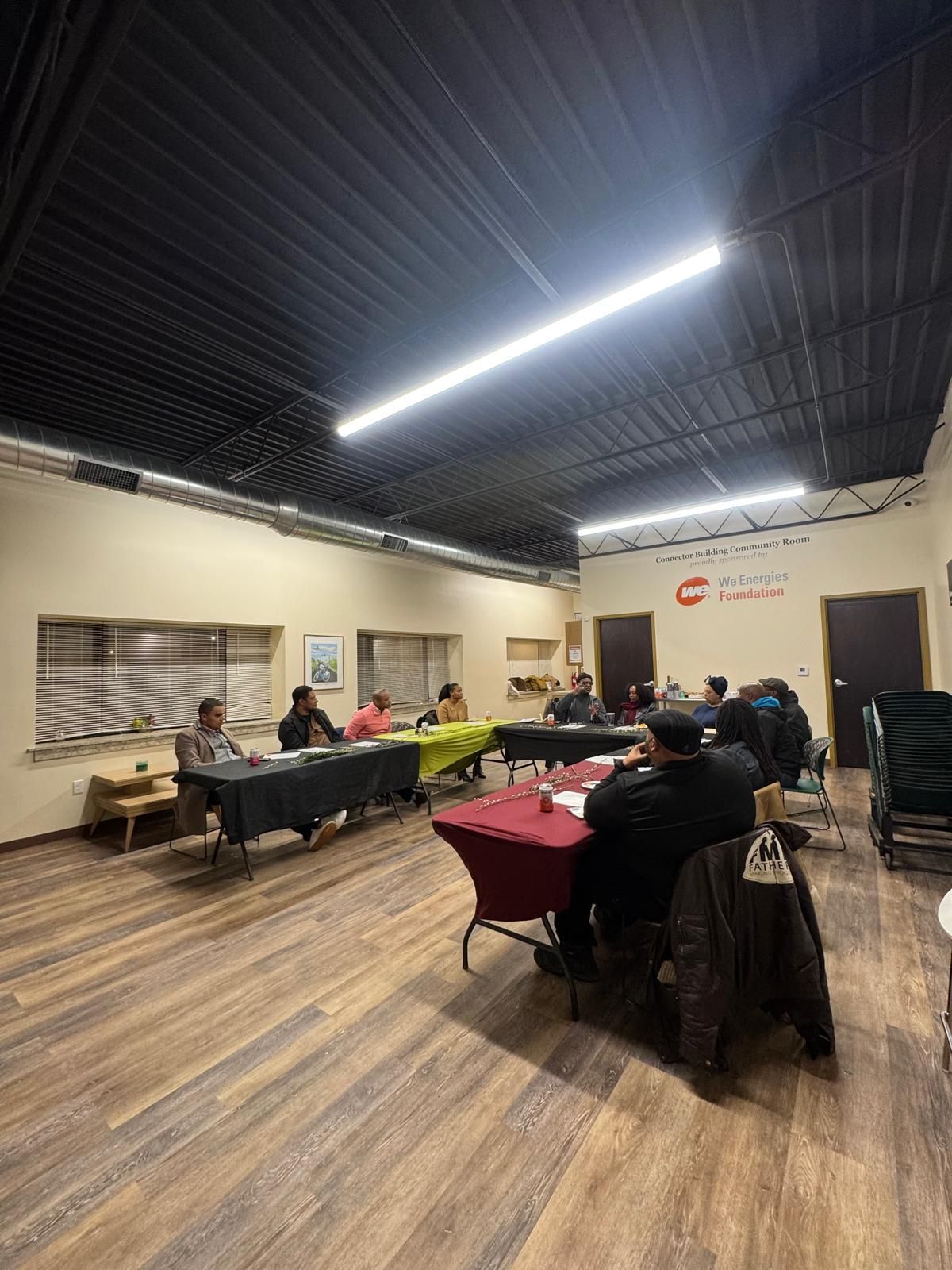
The post-tour reception in the Garden Hall, sponsored by partners including JLA Architects, Wisco NOMA, Findorff, and Saiki Design, extended that spirit of collaboration. The conversations, connections, and fellowship made the evening feel like more than a professional event. It felt like a shared recognition of what Black design leadership contributes to the built environment.
Why This Matters to NOMA
For the National Organization of Minority Architects, the Center for Black Excellence and Culture is a powerful example of mission in motion.
NOMA exists to advance justice, equity, advocacy, professional development, and design excellence for communities of color. This project reflects those values in built form. It shows what happens when minority architects are not simply invited into a process, but trusted to lead with cultural fluency, technical skill, and lived experience.
Representation in architecture is not symbolic. It changes the work.
It changes the questions that are asked, the details that are protected, the histories that are honored, and the communities that are centered. For Wisco NOMA, AIA Wisconsin, and the broader NOMA National network, this tour offered a clear reminder that Black architects, designers, planners, contractors, and developers are shaping some of the most important cultural and civic spaces in our region.
The Center gives that contribution form, scale, and permanence.
President of Wisco NOMA, Taruna Gupta added:
The Center for Black Excellence and Culture is a powerful example of how the built environment can empower communities and create opportunities for future generations. As Wisco NOMA, we believe design is a vehicle for justice, equity, and representation. This project shows what is possible when Black leadership, talent, and vision are not only included, but empowered to lead. We are especially excited that the Center will host this year’s Project Pipeline Camp, providing young people with hands-on exposure to design and helping inspire the next generation of architects and community leaders. Its impact will extend far beyond the walls of the building, inspiring young people to see themselves as innovators, advocates, and future leaders in our profession and our communities.
Mecca Development’s Reflection: Investment Must Be Intentional
For Mecca Development, this project reinforces one of our core beliefs: development is not just about buildings. It is about ecosystems.
The Center for Black Excellence and Culture demonstrates how the built environment can support belonging, entrepreneurship, storytelling, cultural preservation, and regional attraction. It is a model for how cities can invest in spaces that do more than fill a site. They can build identity, capacity, and community power.
It also raises important questions for developers, institutions, civic leaders, and funders:
What would it look like to invest in culturally specific spaces with the same seriousness given to stadiums, corporate campuses, and entertainment districts?
What would happen if Black architects, planners, designers, and developers were consistently trusted to lead projects rooted in Black communities?
How could more cities use design as a tool to preserve culture, attract talent, support entrepreneurship, and create places where people feel seen?
The Center offers a compelling answer.
Build with intention. Build with cultural clarity. Build with the right team. Build spaces that speak.
A Model Worth Studying
Leaving the Center, I felt proud.
Proud to be connected to the architectural industry. Proud to be part of the NOMA network. Proud to witness a project that elevates the visibility, value, and contribution of Black designers in the built environment.
The Center for Black Excellence and Culture is more than a Madison landmark. It is a case study in what investment and teamwork can do. It is a reminder that architecture can affirm. It is proof that cultural identity can drive design innovation.
And for Mecca Development, NOMA, and every stakeholder committed to equity in the built environment, it is an invitation to keep building spaces where our communities are not only included, but centered.